
California car registration costs a minimum of $65 in base fees, but most drivers pay $150–$500 total depending on vehicle value and county.
How Much Is Car Registration in California? Every Fee Broken Down
The single most important number to know: California charges a $65 base registration fee for most passenger vehicles, but the total amount due — including state, county, and vehicle-specific fees — typically runs between $150 and $500 for the average car owner. Here is a complete breakdown of every charge so you know exactly what to expect before you walk into a DMV office or log on to dmv.ca.gov.
What You Need Before You Register
Before calculating your total, gather the following documents:
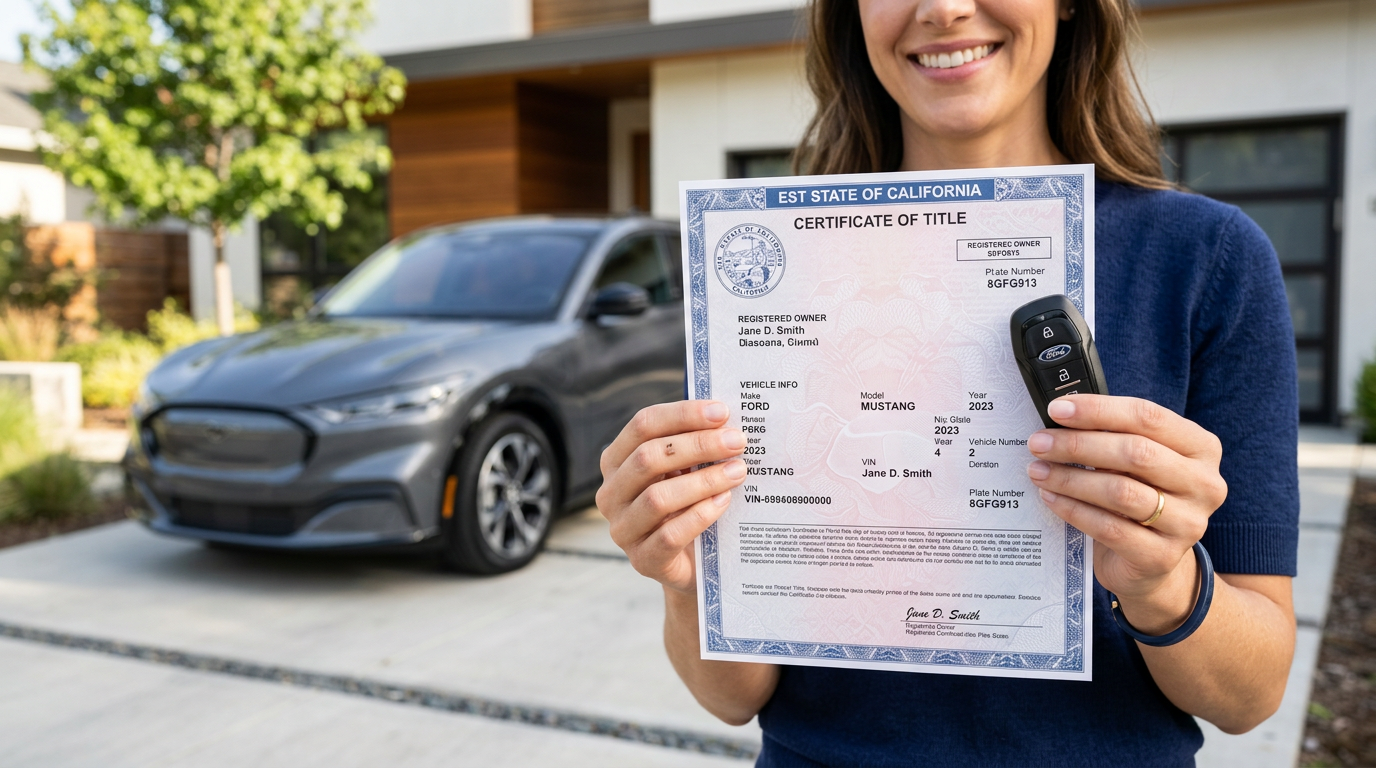
- California Certificate of Title (or out-of-state title if you recently moved)
- Proof of current California auto insurance (minimum liability: $15,000/$30,000/$5,000)
- Smog Check certificate — required for most gasoline-powered vehicles more than 4 years old and every two years at renewal
- Completed REG 343 form (Application for Title or Registration) for new registrations
- Odometer disclosure if the vehicle is under 10 years old
If you purchased a new or used vehicle from a private party, you have 10 days from the date of purchase to submit your transfer paperwork to the California DMV to avoid late penalties.
Step-by-Step Registration Process
Step 1 — Verify your smog status. Most vehicles require a smog inspection before registration. A smog check typically costs $30–$90 at a licensed STAR station. Diesel vehicles under 14,001 lbs. manufactured in 1998 or later are also subject to smog.
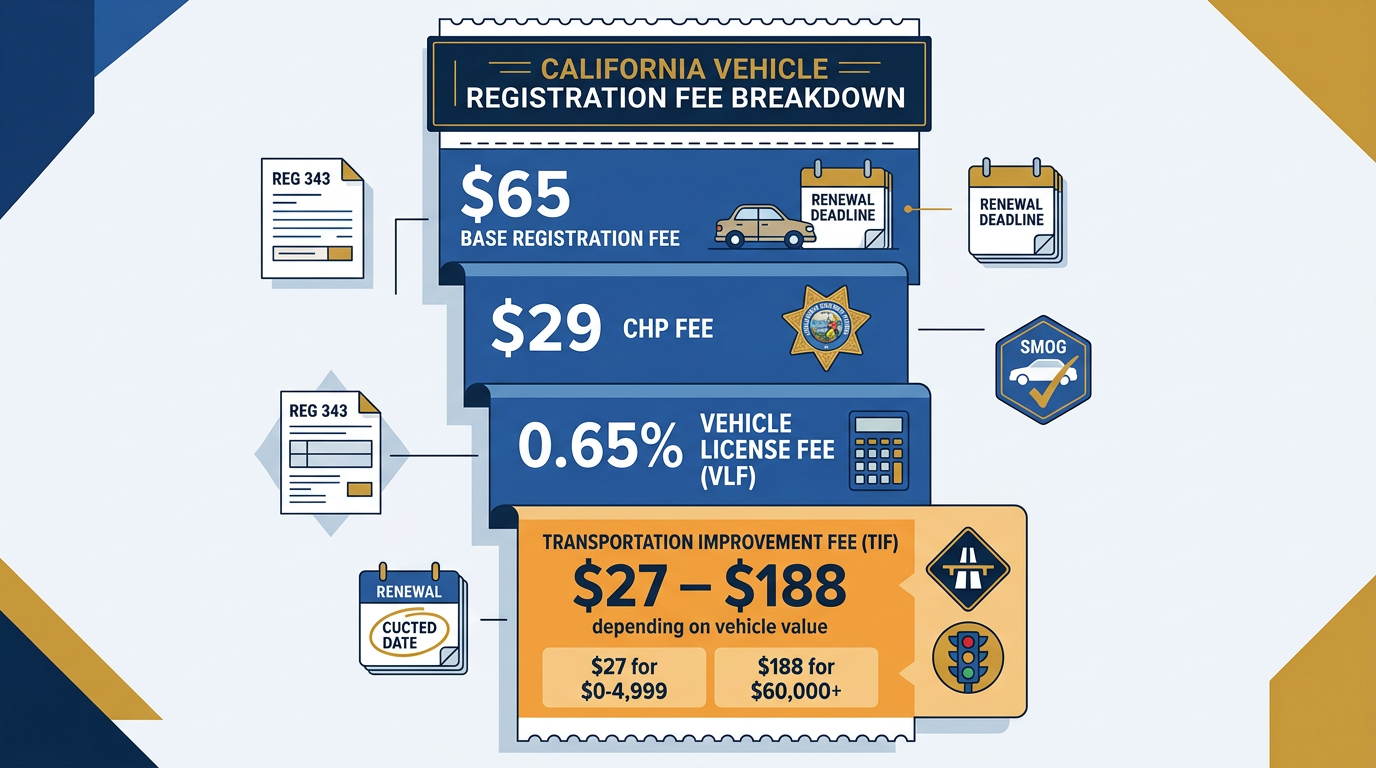
Step 2 — Calculate your Vehicle License Fee (VLF). The VLF is charged at 0.65% of your vehicle’s current market value as determined by the DMV. On a $30,000 vehicle, that equals approximately $195 in VLF alone.
Step 3 — Add county and district fees. Every California county charges a county fee between $7 and $15. District fees for air quality management districts average $6–$26 depending on your region.
Step 4 — Submit your application. You can register online at dmv.ca.gov, by mail, in person at a DMV field office, or through a licensed DMV-authorized dealer or AAA office. In-person wait times average 45–90 minutes at most California DMV offices without a pre-scheduled appointment. Appointments are available online and typically shorten your wait to 15–20 minutes.
Step 5 — Receive your registration card and sticker. After payment, the DMV mails your registration card and license plate sticker within 7–10 business days. A temporary operating permit is issued immediately if you register in person.
Complete California Registration Fee Schedule
Understanding how much is car registration in California means accounting for every line item on your DMV fee statement:
| Fee Type | Amount |
|---|---|
| Base Registration Fee | $65 |
| Vehicle License Fee (VLF) | 0.65% of vehicle value |
| California Highway Patrol (CHP) Fee | $29 |
| Transportation Improvement Fee | $27–$188 (based on value) |
| County/District Fee | $7–$26 |
| Smog Abatement Fee (if exempt from smog) | $25 |
| Late Penalty (1–10 days past due) | $30 |
| Late Penalty (31–60 days past due) | $50 |
| Title Transfer Fee | $21 |
| New Resident Vehicle Use Tax | Based on purchase price (use tax rate 7.25%–10.75%) |
The Transportation Improvement Fee alone ranges from $27 for vehicles valued under $5,000 up to $188 for vehicles valued over $60,000, making it one of the larger variable charges on your statement.
Registration Renewal Timeline and Deadlines
California vehicle registrations expire on the last day of your birth month each year. The DMV mails renewal notices approximately 60 days before expiration. You can renew up to 75 days before your expiration date without affecting your next annual cycle.
Late fees apply the day after expiration. The penalty structure is:
- 1–10 days late: $30 penalty
- 11–30 days late: $50 penalty
- 31–60 days late: $100 penalty
- 61 days – 1 year late: $250 penalty
Vehicles left unregistered for more than one year may require a full reinspection and back-payment of all outstanding fees and penalties.
Common Registration Mistakes to Avoid
Missing the 10-day transfer window. Private-party vehicle sales must be reported to the DMV within 10 days. Missing this deadline triggers an automatic $30 penalty on top of standard fees.
Skipping the smog check. Showing up at the DMV without a valid smog certificate will result in your registration being denied. California waiver assistance is available for vehicles that fail smog and cost more than $650 to repair — the Bureau of Automotive Repair administers up to a $500 consumer assistance grant toward repair costs.
Paying cash at the wrong window. The DMV accepts credit cards, checks, money orders, and cash. Credit card payments incur a 2.1% service fee when processed online.
Not updating your address. California law requires you to notify the DMV of an address change within 10 days of moving. Failure to receive a renewal notice does not exempt you from late penalties.
Assuming electric vehicles are exempt. Battery electric vehicles (BEVs) skip the smog check but still pay all standard fees plus an additional $100 annual Clean Air Vehicle surcharge as of the current fee schedule, bringing their minimum registration cost above $200.
Fee Exemptions and Reductions
Disabled veterans with a 100% service-connected disability qualify for one free set of DV license plates and registration fee waiver on one vehicle. Low-income qualifying residents may also apply for the California Clean Vehicle Rebate Project, which offers up to $7,500 on eligible EV purchases, indirectly reducing the taxable value used for VLF calculation.
Counties with smog-exempt zip codes (certain rural areas) replace the standard smog requirement with a $25 smog abatement fee, added to the base registration cost.
| State | Fee | Processing Time | Online Available | Required Documents | Renewal Period |
|---|---|---|---|---|---|
| California | $65 base + VLF (0.65% of value) | 7–10 business days mail | Yes – dmv.ca.gov | Title, insurance proof, smog cert, REG 343 | Annual (birth month) |
| Texas | $50.75 base + county fees | 5–7 business days | Yes – txdmv.gov | Title, insurance proof, inspection report | Annual |
| Florida | $27.60–$45.60 base | 3–5 business days | Yes – flhsmv.gov | Title, insurance proof, odometer disclosure | Annual |
| New York | $32.50–$140 (weight-based) | 7–10 business days | Yes – dmv.ny.gov | Title, insurance card, odometer reading | Annual or biennial |
| Illinois | $151 flat fee | 5–7 business days | Yes – ilsos.gov | Title, insurance proof, emissions test | Annual |
| Washington | $43 base + weight/RTA fees | 7–10 business days | Yes – dol.wa.gov | Title, insurance proof, emissions cert (some counties) | Annual |
| Arizona | $9 base + VLT (varies) | 5–7 business days | Yes – azdot.gov | Title, insurance proof, emissions (some counties) | Annual |
Frequently Asked Questions
How much is car registration in California for a new car?
New car registration in California costs the $65 base fee plus 0.65% of the vehicle’s purchase price as a Vehicle License Fee. On a $35,000 vehicle, expect to pay roughly $400–$500 total including all state and county fees.
How much does it cost to renew car registration in California?
California registration renewal costs the same fee structure as initial registration — a $65 base fee, $29 CHP fee, Transportation Improvement Fee of $27–$188, and your VLF at 0.65% of current vehicle value. Most owners pay $150–$350 at renewal.
Can I register my car in California online?
Yes. You can renew registration online at dmv.ca.gov. Online credit card payments carry a 2.1% service fee. Your sticker and registration card arrive by mail within 7–10 business days after payment is processed.
What happens if I don’t register my car in California on time?
Late registration penalties start at $30 for 1–10 days past your expiration date and escalate to $250 for 61 days to one year late. Vehicles unregistered for over one year may require full reinspection and payment of all back fees.
Frequently Asked Questions
How much is car registration in California for a new car?
New car registration in California costs the $65 base fee plus 0.65% of the vehicle’s purchase price as a Vehicle License Fee. On a $35,000 vehicle, expect to pay roughly $400–$500 total including all state and county fees.
How much does it cost to renew car registration in California?
California registration renewal costs the same fee structure as initial registration — a $65 base fee, $29 CHP fee, Transportation Improvement Fee of $27–$188, and your VLF at 0.65% of current vehicle value. Most owners pay $150–$350 at renewal.
Can I register my car in California online?
Yes. You can renew registration online at dmv.ca.gov. Online credit card payments carry a 2.1% service fee. Your sticker and registration card arrive by mail within 7–10 business days after payment is processed.
What happens if I don’t register my car in California on time?
Late registration penalties start at $30 for 1–10 days past your expiration date and escalate to $250 for 61 days to one year late. Vehicles unregistered for over one year may require full reinspection and payment of all back fees.
California car registration costs a minimum of $65 in base fees, but most drivers pay $150–$500 total depending on vehicle value and county.
How Much Is Car Registration in California? Every Fee Broken Down
The single most important number to know: California charges a $65 base registration fee for most passenger vehicles, but the total amount due — including state, county, and vehicle-specific fees — typically runs between $150 and $500 for the average car owner. Here is a complete breakdown of every charge so you know exactly what to expect before you walk into a DMV office or log on to dmv.ca.gov.
What You Need Before You Register
Before calculating your total, gather the following documents:
- California Certificate of Title (or out-of-state title if you recently moved)
- Proof of current California auto insurance (minimum liability: $15,000/$30,000/$5,000)
- Smog Check certificate — required for most gasoline-powered vehicles more than 4 years old and every two years at renewal
- Completed REG 343 form (Application for Title or Registration) for new registrations
- Odometer disclosure if the vehicle is under 10 years old
If you purchased a new or used vehicle from a private party, you have 10 days from the date of purchase to submit your transfer paperwork to the California DMV to avoid late penalties.
Step-by-Step Registration Process
Step 1 — Verify your smog status. Most vehicles require a smog inspection before registration. A smog check typically costs $30–$90 at a licensed STAR station. Diesel vehicles under 14,001 lbs. manufactured in 1998 or later are also subject to smog.
Step 2 — Calculate your Vehicle License Fee (VLF). The VLF is charged at 0.65% of your vehicle’s current market value as determined by the DMV. On a $30,000 vehicle, that equals approximately $195 in VLF alone.
Step 3 — Add county and district fees. Every California county charges a county fee between $7 and $15. District fees for air quality management districts average $6–$26 depending on your region.
Step 4 — Submit your application. You can register online at dmv.ca.gov, by mail, in person at a DMV field office, or through a licensed DMV-authorized dealer or AAA office. In-person wait times average 45–90 minutes at most California DMV offices without a pre-scheduled appointment. Appointments are available online and typically shorten your wait to 15–20 minutes.
Step 5 — Receive your registration card and sticker. After payment, the DMV mails your registration card and license plate sticker within 7–10 business days. A temporary operating permit is issued immediately if you register in person.
Complete California Registration Fee Schedule
Understanding how much is car registration in California means accounting for every line item on your DMV fee statement:
| Fee Type | Amount |
|---|---|
| Base Registration Fee | $65 |
| Vehicle License Fee (VLF) | 0.65% of vehicle value |
| California Highway Patrol (CHP) Fee | $29 |
| Transportation Improvement Fee | $27–$188 (based on value) |
| County/District Fee | $7–$26 |
| Smog Abatement Fee (if exempt from smog) | $25 |
| Late Penalty (1–10 days past due) | $30 |
| Late Penalty (31–60 days past due) | $50 |
| Title Transfer Fee | $21 |
| New Resident Vehicle Use Tax | Based on purchase price (use tax rate 7.25%–10.75%) |
The Transportation Improvement Fee alone ranges from $27 for vehicles valued under $5,000 up to $188 for vehicles valued over $60,000, making it one of the larger variable charges on your statement.
Registration Renewal Timeline and Deadlines
California vehicle registrations expire on the last day of your birth month each year. The DMV mails renewal notices approximately 60 days before expiration. You can renew up to 75 days before your expiration date without affecting your next annual cycle.
Late fees apply the day after expiration. The penalty structure is:
- 1–10 days late: $30 penalty
- 11–30 days late: $50 penalty
- 31–60 days late: $100 penalty
- 61 days – 1 year late: $250 penalty
Vehicles left unregistered for more than one year may require a full reinspection and back-payment of all outstanding fees and penalties.
Common Registration Mistakes to Avoid
Missing the 10-day transfer window. Private-party vehicle sales must be reported to the DMV within 10 days. Missing this deadline triggers an automatic $30 penalty on top of standard fees.
Skipping the smog check. Showing up at the DMV without a valid smog certificate will result in your registration being denied. California waiver assistance is available for vehicles that fail smog and cost more than $650 to repair — the Bureau of Automotive Repair administers up to a $500 consumer assistance grant toward repair costs.
Paying cash at the wrong window. The DMV accepts credit cards, checks, money orders, and cash. Credit card payments incur a 2.1% service fee when processed online.
Not updating your address. California law requires you to notify the DMV of an address change within 10 days of moving. Failure to receive a renewal notice does not exempt you from late penalties.
Assuming electric vehicles are exempt. Battery electric vehicles (BEVs) skip the smog check but still pay all standard fees plus an additional $100 annual Clean Air Vehicle surcharge as of the current fee schedule, bringing their minimum registration cost above $200.
Fee Exemptions and Reductions
Disabled veterans with a 100% service-connected disability qualify for one free set of DV license plates and registration fee waiver on one vehicle. Low-income qualifying residents may also apply for the California Clean Vehicle Rebate Project, which offers up to $7,500 on eligible EV purchases, indirectly reducing the taxable value used for VLF calculation.
Counties with smog-exempt zip codes (certain rural areas) replace the standard smog requirement with a $25 smog abatement fee, added to the base registration cost.
| State | Fee | Processing Time | Online Available | Required Documents | Renewal Period |
|---|---|---|---|---|---|
| California | $65 base + VLF (0.65% of value) | 7–10 business days mail | Yes – dmv.ca.gov | Title, insurance proof, smog cert, REG 343 | Annual (birth month) |
| Texas | $50.75 base + county fees | 5–7 business days | Yes – txdmv.gov | Title, insurance proof, inspection report | Annual |
| Florida | $27.60–$45.60 base | 3–5 business days | Yes – flhsmv.gov | Title, insurance proof, odometer disclosure | Annual |
| New York | $32.50–$140 (weight-based) | 7–10 business days | Yes – dmv.ny.gov | Title, insurance card, odometer reading | Annual or biennial |
| Illinois | $151 flat fee | 5–7 business days | Yes – ilsos.gov | Title, insurance proof, emissions test | Annual |
| Washington | $43 base + weight/RTA fees | 7–10 business days | Yes – dol.wa.gov | Title, insurance proof, emissions cert (some counties) | Annual |
| Arizona | $9 base + VLT (varies) | 5–7 business days | Yes – azdot.gov | Title, insurance proof, emissions (some counties) | Annual |
Frequently Asked Questions
How much is car registration in California for a new car?
New car registration in California costs the $65 base fee plus 0.65% of the vehicle’s purchase price as a Vehicle License Fee. On a $35,000 vehicle, expect to pay roughly $400–$500 total including all state and county fees.
How much does it cost to renew car registration in California?
California registration renewal costs the same fee structure as initial registration — a $65 base fee, $29 CHP fee, Transportation Improvement Fee of $27–$188, and your VLF at 0.65% of current vehicle value. Most owners pay $150–$350 at renewal.
Can I register my car in California online?
Yes. You can renew registration online at dmv.ca.gov. Online credit card payments carry a 2.1% service fee. Your sticker and registration card arrive by mail within 7–10 business days after payment is processed.
What happens if I don’t register my car in California on time?
Late registration penalties start at $30 for 1–10 days past your expiration date and escalate to $250 for 61 days to one year late. Vehicles unregistered for over one year may require full reinspection and payment of all back fees.
Frequently Asked Questions
How much is car registration in California for a new car?
New car registration in California costs the $65 base fee plus 0.65% of the vehicle’s purchase price as a Vehicle License Fee. On a $35,000 vehicle, expect to pay roughly $400–$500 total including all state and county fees.
How much does it cost to renew car registration in California?
California registration renewal costs the same fee structure as initial registration — a $65 base fee, $29 CHP fee, Transportation Improvement Fee of $27–$188, and your VLF at 0.65% of current vehicle value. Most owners pay $150–$350 at renewal.
Can I register my car in California online?
Yes. You can renew registration online at dmv.ca.gov. Online credit card payments carry a 2.1% service fee. Your sticker and registration card arrive by mail within 7–10 business days after payment is processed.
What happens if I don’t register my car in California on time?
Late registration penalties start at $30 for 1–10 days past your expiration date and escalate to $250 for 61 days to one year late. Vehicles unregistered for over one year may require full reinspection and payment of all back fees.