
Navigating the world of the California DMV can feel complex, and understanding the state's vehicle registration system is a challenge for many. For truck owners, this process is often more complicated due to a wider range of variables that influence the final cost. If you've been searching for clarity on california truck registration fees, you're in the right place. These fees are not a single flat rate but a combination of state, county, and vehicle-specific charges that can vary significantly. This guide will break down every component, helping you understand exactly what you're paying for and how to budget for this essential expense.
Whether you operate a small personal pickup or a large commercial fleet, the fees you pay are critical to keeping your vehicle legally on the road. From the base registration fee to weight-based charges and local taxes, we will provide a clear, comprehensive overview. Understanding these costs is the first step toward managing them effectively.
Understanding the Core Components of Your Registration Bill
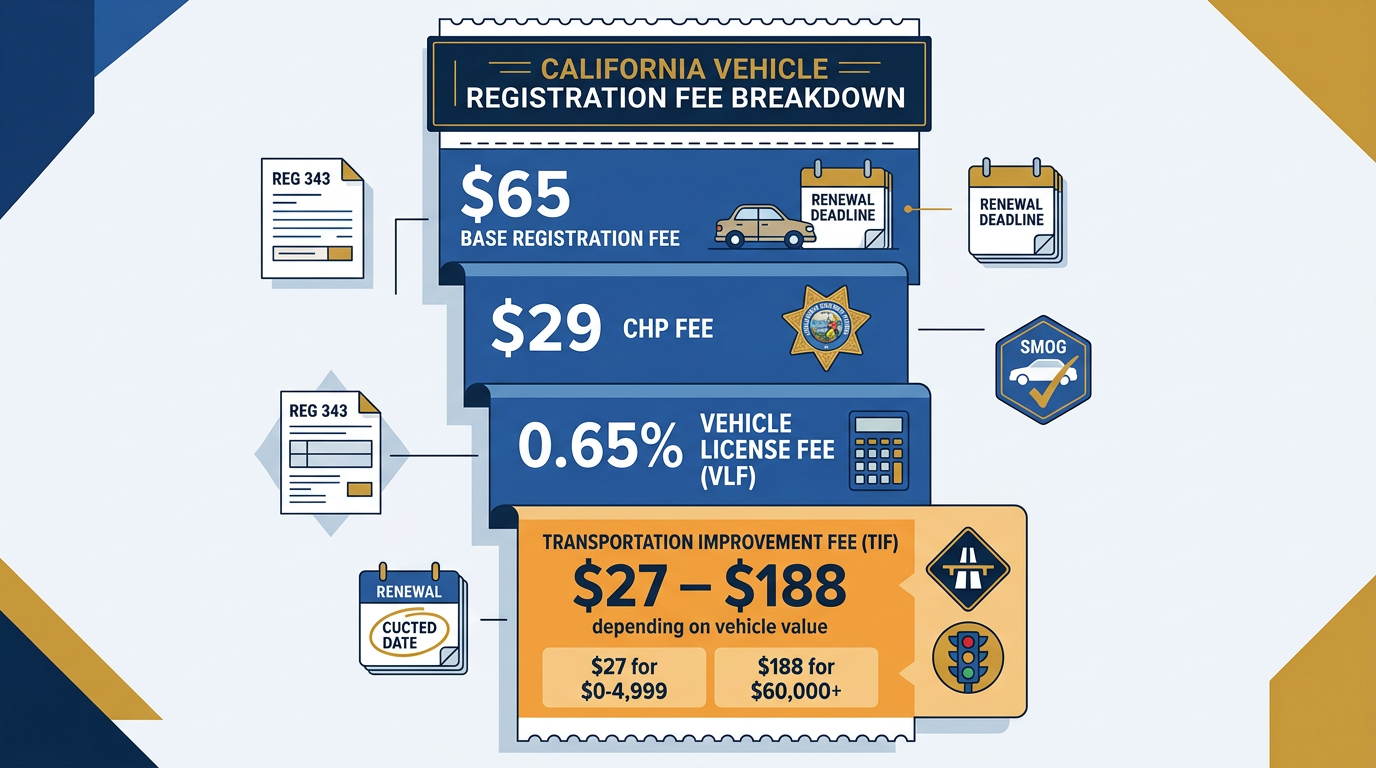
Every vehicle registration in California, including trucks, starts with a set of base fees. These are the foundational costs upon which all other charges are built. Think of them as the standard price of admission for having a vehicle registered in the state. The three primary components are the Registration Fee, the California Highway Patrol (CHP) Fee, and the Vehicle License Fee (VLF).
The Standard Registration Fee
This is a flat fee charged for the annual registration of your truck. It covers the administrative costs for the DMV to maintain your vehicle's record, issue registration cards, and provide stickers for your license plate. This fee is standard across most vehicle types and forms the baseline of your total bill.
California Highway Patrol (CHP) Fee
Another significant flat fee is the CHP fee. This money is allocated directly to the California Highway Patrol to support its operations, which include ensuring safety on state highways, responding to accidents, and enforcing traffic laws. Given the heavy use of roadways by commercial and personal trucks, this fee is a critical part of the funding model for state-level law enforcement on our roads.
Vehicle License Fee (VLF)
The Vehicle License Fee, or VLF, is the most variable of the core fees. Unlike the flat registration and CHP fees, the VLF is a tax based on the value of your vehicle. It is calculated as a small percentage (currently 0.65%) of your truck's purchase price or its current market value, which depreciates over time according to a set schedule determined by the DMV. For new, expensive trucks, the VLF can be a substantial portion of the total registration cost. Conversely, for older, less valuable trucks, this fee will be much lower. This fee is a key reason why total california truck registration fees can differ so much from one vehicle to another, even if they are the same type.
For those involved in buying or selling a vehicle, understanding how ownership changes affect these fees is also important. You can learn more about the associated costs in our guide on fees for transferring a car title in California.
The Impact of Gross Vehicle Weight (GVW) on Your Fees
For trucks, especially commercial ones, the single most significant factor determining registration cost is the declared Gross Vehicle Weight (GVW) or Gross Vehicle Weight Rating (GVWR). The state of California implemented the Commercial Vehicle Registration Act (CVRA) to charge fees based on the wear and tear a vehicle imparts on public roads. Heavier vehicles cause more stress to the infrastructure, so they pay more. This system applies to commercial vehicles weighing over 10,000 pounds, but even light-duty pickups have weight considerations.
Commercial Vehicle Registration Act (CVRA) Fees
Under the CVRA, trucks are placed into a fee schedule based on their declared operating weight. This is the total weight of the truck, its cargo, and the driver. It is crucial for commercial truck owners to declare this weight accurately. Declaring a lower weight than you operate at can lead to hefty fines, while over-declaring means you pay more in registration fees than necessary.
The CVRA fee is calculated in addition to the base registration fees, VLF, and other taxes. The fee increases with each weight bracket. For example, a truck operating at 15,000 pounds will pay a significantly lower CVRA fee than one operating at 60,000 pounds. This tiered system is designed to directly correlate the cost of registration with the vehicle's potential impact on the roads.
Weight Certification for Pickups
Even owners of standard pickup trucks must pay a weight fee. If your pickup has an unladen weight of less than 10,001 pounds and is operated for commercial purposes (or has certain body types), it will be subject to a commercial registration and an associated weight fee. If it is used purely for personal, non-commercial purposes, it may be registered as a passenger vehicle, but you must sign a declaration to that effect. Misrepresenting the use of the vehicle can lead to penalties.
Navigating County and District-Specific Taxes
Beyond statewide fees, your final registration bill is also influenced by where you live and operate your truck. Many counties and special districts in California have voter-approved initiatives that add small fees to vehicle registrations to fund local transportation projects. These fees are collected by the DMV on behalf of the local authorities.
These local taxes can add anywhere from a few dollars to over $30 to your total bill. The amount depends entirely on your registered address. For example, residents of the San Francisco Bay Area may pay a fee for the Bay Area Air Quality Management District, while those in Los Angeles County might contribute to Metro transportation projects. When you see these items on your registration renewal notice, they represent your contribution to maintaining and improving the transportation infrastructure in your immediate area. There is no way to opt out of these fees; they are tied to the vehicle's registered location.
Additional Fees That May Apply to Your Truck
Several other fees can appear on your registration bill depending on your truck's age, type, and your payment history. It's important to be aware of these to avoid surprises.
Smog and Emissions Testing Fees
California has some of the strictest air quality regulations in the nation, and vehicle emissions testing is a major part of that. Most gasoline-powered trucks older than eight model years and most diesel-powered trucks with a GVWR of 14,000 pounds or less require a biennial smog check. The cost of the smog inspection itself is paid directly to the testing station, but your DMV registration will include a Smog Certification Fee. Certain areas have more stringent testing requirements, so it's wise to check if a smog check is required in your county.
Penalties for Late Renewal
The DMV imposes steep penalties for late registration renewal. These penalties can escalate quickly, often consisting of a percentage of the overdue fees. For commercial trucks with high weight fees, these penalties can amount to hundreds of dollars. The DMV provides a grace period, but waiting too long can lead to a much larger bill and the risk of being ticketed. If you're concerned about paying late, it's helpful to understand the structure of DMV late fees and penalties.
How to Accurately Calculate Your Truck Registration Fees
With so many variables, trying to calculate your exact california truck registration fees by hand is impractical. Fortunately, the California DMV provides an online Vehicle Registration Fee Calculator. This is the most reliable tool for estimating your costs for a new purchase or an upcoming renewal.
To use the calculator, you will need:
- The Vehicle Identification Number (VIN)
- License plate number (for renewals)
- The vehicle type (commercial, auto, etc.)
- The purchase date and price (for new vehicles)
- Your registered address (zip code) to determine local fees
- Declared gross vehicle weight (for commercial trucks)
By entering this information, the calculator will generate a detailed estimate that breaks down the various fees, including the VLF, weight fees, and local taxes. This is an invaluable tool for budgeting and ensuring you have sufficient funds available when it's time to register your truck.
The Truck Registration Renewal Process in California
About 60-90 days before your truck's registration expires, the DMV will mail you a renewal notice. This document contains all the critical information about your vehicle, the due date, and a breakdown of the fees owed. It will also state if a smog check is required. If you don't receive a notice, you are still responsible for renewing on time.
You can renew your registration online, by mail, at a DMV office, or at a licensed DMV business partner. The online portal is the most convenient option for most people. You'll need your license plate number and the last five digits of your VIN. After payment, your new registration card and sticker will be mailed to you. Ensure your address with the DMV is current to avoid delays.
Tips for Managing and Potentially Reducing Your Costs
While most registration fees are fixed, there are ways to manage and, in some cases, reduce your overall costs.
- Declare Your Weight Correctly: For commercial operators, this is paramount. Take the time to determine the maximum weight you will be operating at and declare that amount. Under-declaring is illegal, but over-declaring costs you money.
- Pay on Time: The easiest way to save money is to avoid late penalties. Mark your renewal date on a calendar or set a digital reminder.
- Check for Exemptions: Certain vehicles, such as those used exclusively for agriculture or those with specific alternative fuel sources, may be eligible for partial exemptions from weight fees or other charges. Research the specific rules related to your vehicle type and usage.
- Register as a Passenger Vehicle if Applicable: If you have a pickup truck that is used solely for personal transport, ensure it is registered as a passenger vehicle to avoid commercial fees.
By staying informed and proactive, you can navigate the complexities of california truck registration fees with confidence, ensuring your truck remains legally on the road without overpaying.
Frequently Asked Questions
What is the main factor that determines California truck registration fees?
The most significant factor for commercial trucks is the declared gross vehicle weight (GVW). For all trucks, the vehicle’s value (for the VLF) and the county of registration are also major factors.
How is the Vehicle License Fee (VLF) calculated for a truck in California?
The VLF is a tax based on your truck’s value. It is calculated at 0.65% of the purchase price or current depreciated value as determined by a schedule set by the California DMV.
Do I have to pay a weight fee for my personal pickup truck?
If your pickup truck is used strictly for personal, non-business purposes, you can typically register it as a passenger vehicle and avoid commercial weight fees. However, if it has a commercial body type or is used for business, weight fees will apply.
How can I find out the exact registration fee for my truck?
The most accurate way is to use the official California DMV’s online vehicle registration fee calculator, which will provide a detailed estimate based on your vehicle’s specific details.
What happens if I pay my California truck registration late?
The DMV assesses significant financial penalties for late renewals. These penalties increase over time and are calculated as a percentage of your total registration and weight fees.
Does my registration fee include the cost of a smog check?
No, the registration fee bill includes a smog certification fee paid to the state, but you must pay the smog inspection station separately for the actual test.
Why is my truck registration more expensive than my neighbor’s?
Differences in cost are typically due to variations in the truck’s value (affecting the VLF), its declared gross vehicle weight (for commercial trucks), and potentially different local taxes based on your specific address.
Navigating the world of the California DMV can feel complex, and understanding the state's vehicle registration system is a challenge for many. For truck owners, this process is often more complicated due to a wider range of variables that influence the final cost. If you've been searching for clarity on california truck registration fees, you're in the right place. These fees are not a single flat rate but a combination of state, county, and vehicle-specific charges that can vary significantly. This guide will break down every component, helping you understand exactly what you're paying for and how to budget for this essential expense.
Whether you operate a small personal pickup or a large commercial fleet, the fees you pay are critical to keeping your vehicle legally on the road. From the base registration fee to weight-based charges and local taxes, we will provide a clear, comprehensive overview. Understanding these costs is the first step toward managing them effectively.
Understanding the Core Components of Your Registration Bill
Every vehicle registration in California, including trucks, starts with a set of base fees. These are the foundational costs upon which all other charges are built. Think of them as the standard price of admission for having a vehicle registered in the state. The three primary components are the Registration Fee, the California Highway Patrol (CHP) Fee, and the Vehicle License Fee (VLF).
The Standard Registration Fee
This is a flat fee charged for the annual registration of your truck. It covers the administrative costs for the DMV to maintain your vehicle's record, issue registration cards, and provide stickers for your license plate. This fee is standard across most vehicle types and forms the baseline of your total bill.
California Highway Patrol (CHP) Fee
Another significant flat fee is the CHP fee. This money is allocated directly to the California Highway Patrol to support its operations, which include ensuring safety on state highways, responding to accidents, and enforcing traffic laws. Given the heavy use of roadways by commercial and personal trucks, this fee is a critical part of the funding model for state-level law enforcement on our roads.
Vehicle License Fee (VLF)
The Vehicle License Fee, or VLF, is the most variable of the core fees. Unlike the flat registration and CHP fees, the VLF is a tax based on the value of your vehicle. It is calculated as a small percentage (currently 0.65%) of your truck's purchase price or its current market value, which depreciates over time according to a set schedule determined by the DMV. For new, expensive trucks, the VLF can be a substantial portion of the total registration cost. Conversely, for older, less valuable trucks, this fee will be much lower. This fee is a key reason why total california truck registration fees can differ so much from one vehicle to another, even if they are the same type.
For those involved in buying or selling a vehicle, understanding how ownership changes affect these fees is also important. You can learn more about the associated costs in our guide on fees for transferring a car title in California.
The Impact of Gross Vehicle Weight (GVW) on Your Fees
For trucks, especially commercial ones, the single most significant factor determining registration cost is the declared Gross Vehicle Weight (GVW) or Gross Vehicle Weight Rating (GVWR). The state of California implemented the Commercial Vehicle Registration Act (CVRA) to charge fees based on the wear and tear a vehicle imparts on public roads. Heavier vehicles cause more stress to the infrastructure, so they pay more. This system applies to commercial vehicles weighing over 10,000 pounds, but even light-duty pickups have weight considerations.
Commercial Vehicle Registration Act (CVRA) Fees
Under the CVRA, trucks are placed into a fee schedule based on their declared operating weight. This is the total weight of the truck, its cargo, and the driver. It is crucial for commercial truck owners to declare this weight accurately. Declaring a lower weight than you operate at can lead to hefty fines, while over-declaring means you pay more in registration fees than necessary.
The CVRA fee is calculated in addition to the base registration fees, VLF, and other taxes. The fee increases with each weight bracket. For example, a truck operating at 15,000 pounds will pay a significantly lower CVRA fee than one operating at 60,000 pounds. This tiered system is designed to directly correlate the cost of registration with the vehicle's potential impact on the roads.
Weight Certification for Pickups
Even owners of standard pickup trucks must pay a weight fee. If your pickup has an unladen weight of less than 10,001 pounds and is operated for commercial purposes (or has certain body types), it will be subject to a commercial registration and an associated weight fee. If it is used purely for personal, non-commercial purposes, it may be registered as a passenger vehicle, but you must sign a declaration to that effect. Misrepresenting the use of the vehicle can lead to penalties.
Navigating County and District-Specific Taxes
Beyond statewide fees, your final registration bill is also influenced by where you live and operate your truck. Many counties and special districts in California have voter-approved initiatives that add small fees to vehicle registrations to fund local transportation projects. These fees are collected by the DMV on behalf of the local authorities.
These local taxes can add anywhere from a few dollars to over $30 to your total bill. The amount depends entirely on your registered address. For example, residents of the San Francisco Bay Area may pay a fee for the Bay Area Air Quality Management District, while those in Los Angeles County might contribute to Metro transportation projects. When you see these items on your registration renewal notice, they represent your contribution to maintaining and improving the transportation infrastructure in your immediate area. There is no way to opt out of these fees; they are tied to the vehicle's registered location.
Additional Fees That May Apply to Your Truck
Several other fees can appear on your registration bill depending on your truck's age, type, and your payment history. It's important to be aware of these to avoid surprises.
Smog and Emissions Testing Fees
California has some of the strictest air quality regulations in the nation, and vehicle emissions testing is a major part of that. Most gasoline-powered trucks older than eight model years and most diesel-powered trucks with a GVWR of 14,000 pounds or less require a biennial smog check. The cost of the smog inspection itself is paid directly to the testing station, but your DMV registration will include a Smog Certification Fee. Certain areas have more stringent testing requirements, so it's wise to check if a smog check is required in your county.
Penalties for Late Renewal
The DMV imposes steep penalties for late registration renewal. These penalties can escalate quickly, often consisting of a percentage of the overdue fees. For commercial trucks with high weight fees, these penalties can amount to hundreds of dollars. The DMV provides a grace period, but waiting too long can lead to a much larger bill and the risk of being ticketed. If you're concerned about paying late, it's helpful to understand the structure of DMV late fees and penalties.
How to Accurately Calculate Your Truck Registration Fees
With so many variables, trying to calculate your exact california truck registration fees by hand is impractical. Fortunately, the California DMV provides an online Vehicle Registration Fee Calculator. This is the most reliable tool for estimating your costs for a new purchase or an upcoming renewal.
To use the calculator, you will need:
- The Vehicle Identification Number (VIN)
- License plate number (for renewals)
- The vehicle type (commercial, auto, etc.)
- The purchase date and price (for new vehicles)
- Your registered address (zip code) to determine local fees
- Declared gross vehicle weight (for commercial trucks)
By entering this information, the calculator will generate a detailed estimate that breaks down the various fees, including the VLF, weight fees, and local taxes. This is an invaluable tool for budgeting and ensuring you have sufficient funds available when it's time to register your truck.
The Truck Registration Renewal Process in California
About 60-90 days before your truck's registration expires, the DMV will mail you a renewal notice. This document contains all the critical information about your vehicle, the due date, and a breakdown of the fees owed. It will also state if a smog check is required. If you don't receive a notice, you are still responsible for renewing on time.
You can renew your registration online, by mail, at a DMV office, or at a licensed DMV business partner. The online portal is the most convenient option for most people. You'll need your license plate number and the last five digits of your VIN. After payment, your new registration card and sticker will be mailed to you. Ensure your address with the DMV is current to avoid delays.
Tips for Managing and Potentially Reducing Your Costs
While most registration fees are fixed, there are ways to manage and, in some cases, reduce your overall costs.
- Declare Your Weight Correctly: For commercial operators, this is paramount. Take the time to determine the maximum weight you will be operating at and declare that amount. Under-declaring is illegal, but over-declaring costs you money.
- Pay on Time: The easiest way to save money is to avoid late penalties. Mark your renewal date on a calendar or set a digital reminder.
- Check for Exemptions: Certain vehicles, such as those used exclusively for agriculture or those with specific alternative fuel sources, may be eligible for partial exemptions from weight fees or other charges. Research the specific rules related to your vehicle type and usage.
- Register as a Passenger Vehicle if Applicable: If you have a pickup truck that is used solely for personal transport, ensure it is registered as a passenger vehicle to avoid commercial fees.
By staying informed and proactive, you can navigate the complexities of california truck registration fees with confidence, ensuring your truck remains legally on the road without overpaying.
Frequently Asked Questions
What is the main factor that determines California truck registration fees?
The most significant factor for commercial trucks is the declared gross vehicle weight (GVW). For all trucks, the vehicle’s value (for the VLF) and the county of registration are also major factors.
How is the Vehicle License Fee (VLF) calculated for a truck in California?
The VLF is a tax based on your truck’s value. It is calculated at 0.65% of the purchase price or current depreciated value as determined by a schedule set by the California DMV.
Do I have to pay a weight fee for my personal pickup truck?
If your pickup truck is used strictly for personal, non-business purposes, you can typically register it as a passenger vehicle and avoid commercial weight fees. However, if it has a commercial body type or is used for business, weight fees will apply.
How can I find out the exact registration fee for my truck?
The most accurate way is to use the official California DMV’s online vehicle registration fee calculator, which will provide a detailed estimate based on your vehicle’s specific details.
What happens if I pay my California truck registration late?
The DMV assesses significant financial penalties for late renewals. These penalties increase over time and are calculated as a percentage of your total registration and weight fees.
Does my registration fee include the cost of a smog check?
No, the registration fee bill includes a smog certification fee paid to the state, but you must pay the smog inspection station separately for the actual test.
Why is my truck registration more expensive than my neighbor’s?
Differences in cost are typically due to variations in the truck’s value (affecting the VLF), its declared gross vehicle weight (for commercial trucks), and potentially different local taxes based on your specific address.